
 Here when help cannot wait
Severe toothache or an injured tooth?
Emergency dental care for adults and children in Tallinn. With acute pain or an injury we will try to see you the same day.
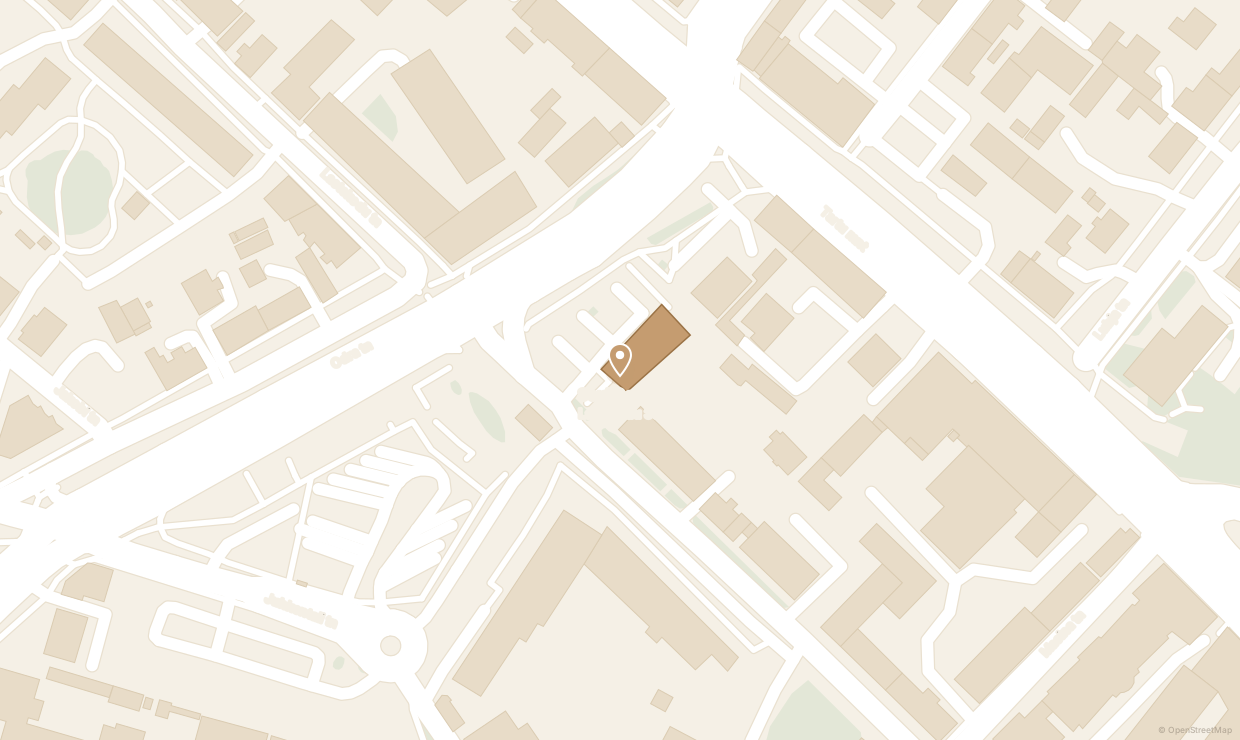
Lastekodu 35, Tallinn · free parking at the door Tervisekassa partner
Call before 15:00 and we will try to see you the same day. With acute pain it is better to call: we will tell you the nearest free slot straight away. If calling is awkward, write to us in the chat.
What has happened?
Choose your situation and we will tell you what to do before your appointment.


What to do before your appointment
Choose a situation above or open the one you need here. These measures do not treat the cause; they help you get to the dentist without making things worse.
Does a tooth hurt badly?
Call us — every working day we keep time free for patients in acute pain. Before your appointment:
- Something cold against the cheek eases the pain and swelling for a while. Hold it through a cloth for 5–10 minutes, then take a break.
- You can rinse your mouth gently with warm salt water.
- If you need to, take the painkiller you usually use, following the dose and contraindications on the packet exactly.
- Do not warm the painful area and do not hold a tablet against the tooth or gum — it burns the lining of the mouth.
- When you rest, keep your head slightly raised: lying flat usually makes the throbbing worse.
These measures make things easier for a while, but they do not remove the cause of the pain. Do not put off seeing a dentist.
Is your gum or cheek swollen?
- Swelling can be a sign of infection. Call us during opening hours, ideally today, so that a dentist can assess it.
- Something cold on the outside eases the pain and swelling for a while. Heat must not be used — it makes the infection spread faster.
- Do not try to open the swelling yourself and do not start antibiotics without a prescription.
- If the swelling spreads towards the eye or the neck, swallowing or breathing becomes difficult, you develop a high temperature or you feel rapidly worse — call 112 and go to the emergency department.
Is a tooth chipped or broken?
- If you still have the fragment, bring it with you — the dentist may be able to use it to rebuild the shape of the tooth.
- If the edge is sharp, try not to touch it with your tongue so that it does not cut the soft tissue.
- Do not chew on that side before your appointment and avoid hard food.
- Call us and book an examination, even if the tooth does not hurt: the break can grow and the tooth can start to feel sensitive.
Has a filling or crown come out?
- If the crown came out in one piece, keep it and bring it with you — in some cases it can be cemented back.
- Do not try to stick the crown back yourself and never use household glue.
- Chew on the other side until your appointment and clean that tooth gently.
- Book an appointment within the next few days even if the tooth does not hurt: without a filling or crown it is left unprotected and breaks down faster.
Have you had a fall or a blow?
- Check whether the tooth is loose, has moved out of place or is chipped. Something cold on the outside eases the pain and swelling for a while.
- Get in touch the same day even if everything looks fine: the consequences of an injury do not always show straight away.
- Do not wiggle the tooth or try to push it back into place yourself.
- If there has been loss of consciousness, heavy bleeding or a serious injury to the head or face, call 112 or go to the emergency department.
Has a tooth been knocked out completely?
If it is an adult tooth, act quickly:
- Pick the tooth up by the crown only, without touching the root.
- Do not rub it, do not brush it and do not treat the root surface with anything.
- Keep the tooth in milk or saline until your appointment. It must not be kept in water and must not be allowed to dry out.
- Call us straight away. The sooner the tooth is put back in place, the better the chance of saving it — the first hour matters most.
A baby tooth should not be put back in yourself.
Has a child fallen and hit their teeth?
- Calm the child down and look at the teeth. Something cold on the outside, through a cloth, eases the pain and swelling for a while.
- If a baby tooth has been knocked out, do not put it back — that can damage the adult tooth developing underneath.
- If an adult tooth has been knocked out, find it, hold it by the crown only and put it in milk. Call us straight away.
- Get in touch in any case, even if everything looks fine. The dentist will assess the situation and tell you how urgently the child needs to be seen.
Won't the bleeding stop?
- Bite down firmly on a clean piece of gauze and hold it in place for 20–30 minutes. Do not change it too often.
- Do not rinse your mouth, do not smoke and avoid hot food and drink — they break up the clot and the bleeding starts again.
- Something cold against the cheek reduces the bleeding and the swelling.
- If the bleeding does not ease or is heavy, get in touch with us. Outside our opening hours, with heavy or continuing bleeding, go to the emergency department or call 112.
If you are pregnant, take medicines regularly or have a long-term condition, check the choice of painkiller with a doctor or pharmacist. This section does not replace an examination.
When to come to us urgently
These situations need a dentist soon. With acute pain or an injury we will try to see you the same day.
Today
ideally within a few hours
- Severe toothache
- A swollen gum or cheek
- An injured tooth
As soon as possible
within the next few days
- A chipped or broken tooth
- A filling or crown that has come out
- Pain after an extraction
- Wisdom tooth pain
Planned, but do not leave it
- Discomfort that keeps growing
- A loose tooth
- The same trouble coming back
When to call 112
These signs need emergency medical care, not a dental appointment. Call 112 or go to the emergency department.
- Breathing is becoming difficult
- Swallowing is difficult because the swelling is growing
- Swelling spreading to the eye or the neck, a temperature above 38 °C
- Heavy bleeding that will not stop
- Loss of consciousness or a serious head or facial injury
- A suspected broken jaw
What happens at an emergency appointment
The job of the first visit is to deal with the acute problem, save the tooth where that is possible and help you as quickly as we can.
The dentist examines the tooth and the painful area. If needed, we take an X-ray.
We reduce the pain and treat what is causing it. Depending on the situation we treat the infection, begin root canal treatment, stop the bleeding or stabilise the damaged tooth. Treatment is carried out under anaesthetic.
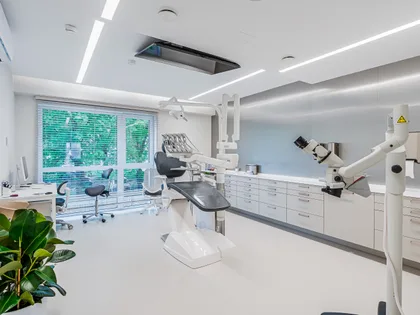
If the tooth can be kept, the dentist will suggest the most suitable option. Root canals are treated under a microscope, and we can start at the first appointment.
Sometimes it is all settled in one visit. If treatment needs to continue, we go through the plan and the cost before any work begins.
Relieving the pain is the main job of the first appointment. If treatment needs to continue, the dentist will give you the help you need at that first visit and will go through the later stages and their cost with you in advance.

Has a child fallen and hit their teeth?
It happens often. The main thing is to stay calm and do the right things.
If a baby tooth has been knocked out
Do not put the tooth back in yourself — that can damage the adult tooth developing underneath. Get in touch with us and the dentist will tell you how urgently the child needs to be seen.
If an adult tooth has been knocked out
Here speed matters. Find the tooth, hold it by the crown only without touching the root, and do not let it dry out. Put it in milk and contact the clinic as soon as you can — the sooner help arrives, the better the chance of saving the tooth.
Why patients trust us


What helps and what does not
If you did not find your situation above, here are a few general pointers for the time before you see a dentist.
Do
- Something cold against the cheek eases the pain and swelling for a while. Cool the cheek for 10–15 minutes at a time, with breaks in between.
- If you need to, take the painkiller you usually use, following the dose and contraindications on the packet.
- When you rest, keep your head slightly raised — lying flat usually makes the throbbing worse.
- Note when the pain started and what sets it off: cold, heat, biting down or something else. It helps the dentist find the cause faster.
Do not
- Do not warm the painful area — heat increases the swelling and the infection.
- Do not hold tablets or other medicines directly against the tooth or gum — it damages the lining of the mouth.
- Do not try to open a swelling yourself.
- Do not put off seeing a dentist once there is swelling, even if the pain has eased.
- Do not start antibiotics without a prescription — whether they are needed, and which one, is for the dentist to decide.
What happens when you get in touch
Three steps from the call to the chair.
+372 5885 7770. Say straight away that the pain is acute — we then look for the nearest free slot rather than a place in the general queue.
When the pain started, what makes it worse, whether there is swelling or a temperature. That decides how much time the dentist sets aside and what is prepared in advance.
Lastekodu tn 35-18, Tallinn. Parking at the door is free and the entrance is level with the pavement. Bring some ID and a list of any medicines you take regularly.
What an emergency appointment costs
The cost is worked out from the clinic's usual price list, exactly as it is for planned treatment. There is no surcharge for an urgent slot or for a Saturday.
Price list valid from 05.09.2026. The dentist gives you the exact figure after the examination and before treatment starts — you agree to it before we begin. The full price list →
We accept health insurance: with some insurers we settle directly, with others we provide the documents for reimbursement. More about insurance →
What can cover the cost
Tervisekassa
We have contracts with Tervisekassa, the Estonian health insurance fund, for both adults and children. The adult dental benefit is 60 euros a year, and 105 euros a year for the groups entitled to more. In the cases Tervisekassa provides for, emergency dental care is available to adults without health insurance as well. For children and young people under 19, treatment at a contract partner is paid for by Tervisekassa. There is nothing to arrange in advance — the benefit is applied at the clinic and taken off your bill.
How much of your treatment the benefit covers in your case is something we check before treatment starts.
Payment and instalments
You can pay at the clinic by card or in cash. If the treatment turns out to be extensive, the bill can be split into monthly payments — the terms, the partner banks and the rates are set out on a separate page.
The instalment agreement is arranged at the clinic; there is no separate trip to the bank.
Special cases
If you are afraid of the dentist
Tell us when you book. We set aside more time for an appointment like that, explain every step in advance and work at a pace that suits you. If you need a break, give us a sign and we stop. Treatment is carried out under anaesthetic.
Children in acute pain
For children under 19, dental treatment at a Tervisekassa contract partner is paid for by Tervisekassa. With acute pain, book by phone: we will find a dentist who treats children and a time that suits the child's age.
If a tooth starts hurting in the evening, at night or on a Sunday
The clinic is open Monday to Saturday, 09:00 to 18:00. If the pain started outside those hours:
- Leave a request on the site or write to us in the chat. In the morning we contact the patients who need help urgently first.
- Until your appointment, the advice above will help: something cold on the outside, a painkiller as directed on the packet and the other measures for your situation.
- If the swelling is pronounced or growing quickly, you have a high temperature, swallowing or breathing is difficult, or there has been a serious injury to the jaw, go to the emergency department or call 112.
Who sees patients in acute pain
Patients in acute pain are seen by our dentists: the job of the first appointment is to relieve the pain and find out what is behind it. Where root canals are involved, we treat them under a microscope at that first appointment. If a tooth has to come out, or other surgery is needed, an implant surgeon joins in — which is why the list has both dentists and surgeons. Who sees you depends on your symptoms and on the nearest free slot.






Common questions
How quickly will I be seen?
We keep time free in the diary every day for patients in acute pain. If you get in touch before 15:00, we will try to see you the same day. We will tell you the nearest available time on the phone.
Will you see me if I have never been to you before?
Yes, of course. We see new patients in acute pain too. There is nothing to arrange in advance — we will offer you the nearest available time.
Do you take walk-ins?
It is better to call first: we will offer you the nearest free slot and you will not have to wait at the clinic. If you have already arrived without an appointment, we will try to see you at the first opportunity.
My cheek is swollen. Is that urgent?
Swelling of the cheek or gum can be a sign of infection and needs to be examined by a dentist. Get in touch during opening hours to book an appointment.
If the swelling is growing quickly, spreading towards the eye or the neck, you have a high temperature, or swallowing or breathing is becoming difficult — call 112 rather than waiting for the clinic to open.
What should I do if the toothache starts at night?
Until you can see a dentist you can take a painkiller as directed on the packet and hold something cold against the cheek. Leave a request on the site or write to us in the chat — in the morning we will get back to you as a priority.
If the pain comes with pronounced swelling, a high temperature, difficulty swallowing or breathing, or a serious injury to the jaw — call 112.
Will the pain be dealt with at the first appointment?
Yes. The main job of an emergency appointment is to remove the pain or reduce it as far as possible. The dentist examines you and gives you the help you need. If the treatment cannot be finished in one visit, we complete the first stage and book you in to carry on.
Can a tooth be treated in a single visit?
It depends on the diagnosis and on how complex the treatment is. Many procedures can be done in one appointment, but some — root canal treatment, for instance — take several. The dentist goes through the treatment plan and the cost with you beforehand.
How much will the treatment cost?
A consultation, examination and treatment plan cost 50 €. What the treatment itself costs depends on the diagnosis and on what needs doing. The dentist gives you the exact figure after the examination and before treatment starts.
There is no extra charge for an urgent appointment or for a Saturday.
Does Tervisekassa cover the treatment?
Tervisekassa pays for certain kinds of emergency dental care, including for adults without health insurance. Planned treatment can be partly covered by the dental benefit.
How much the benefit is, and the conditions for using it, depend on which group you are in and on the treatment. At the appointment we will check what Tervisekassa covers in your case.
Do you see children in acute pain?
Yes. Tell us the child's age when you book and we will find a suitable time and a dentist who treats children.
For patients under 19, dental treatment at a Tervisekassa contract partner is paid for by Tervisekassa.
Can I pay for the treatment in instalments?
Yes. You can pay at the clinic by card or in cash. For more extensive treatment there are instalments, which can be arranged at the clinic itself without a trip to the bank.
I am afraid of dentists. What should I do?
Do tell us when you book. We set aside more time for the appointment, explain each stage in advance and work at a pace that suits you.
Treatment is carried out under anaesthetic, and the dentist will stop at any point if you give a sign.
What should I bring with me?
Bring some ID and tell the dentist about any medicines you take regularly. If a tooth is broken, bring the pieces with you if you can.
Anything else we need, we will go through with you when we book the appointment.
What if the pain has gone on its own?
Even when the pain has gone it is worth seeing a dentist. Sometimes the pain eases not because things are healing but because the pulp — the nerve — has been damaged or has died, while the infection carries on. Being examined in good time helps you avoid complications and more difficult treatment.
Is a tooth hurting, or has something happened?
Call us — we will go through the symptoms, judge how urgent it is and find you the nearest suitable time.
 Time kept free for acute pain every working day
 Free parking at the door
 Step-free entrance, a lift to the floor above
 If your plans change, let us know at least 24 hours before the appointment — that way the time can go to another patient who needs it.